
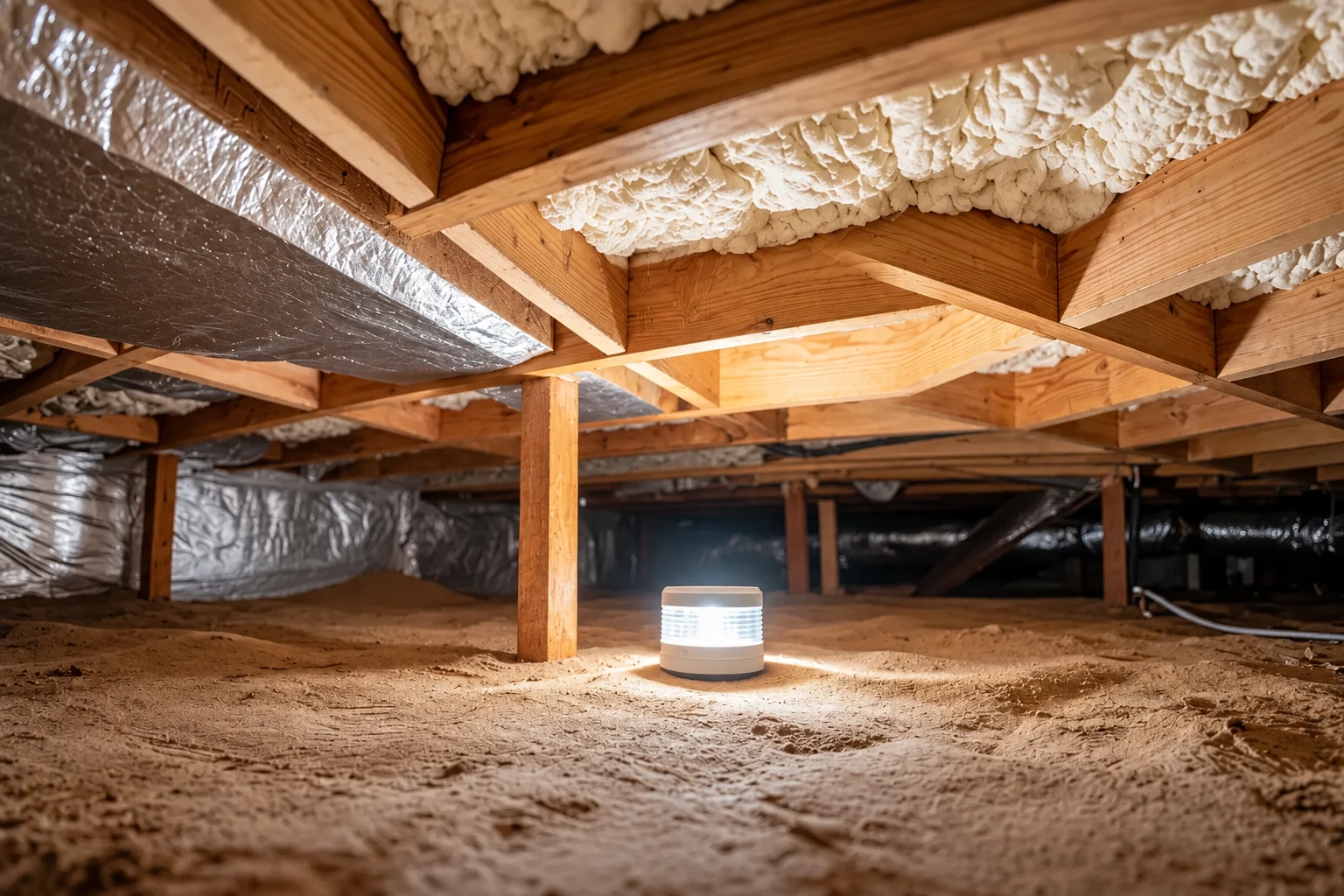
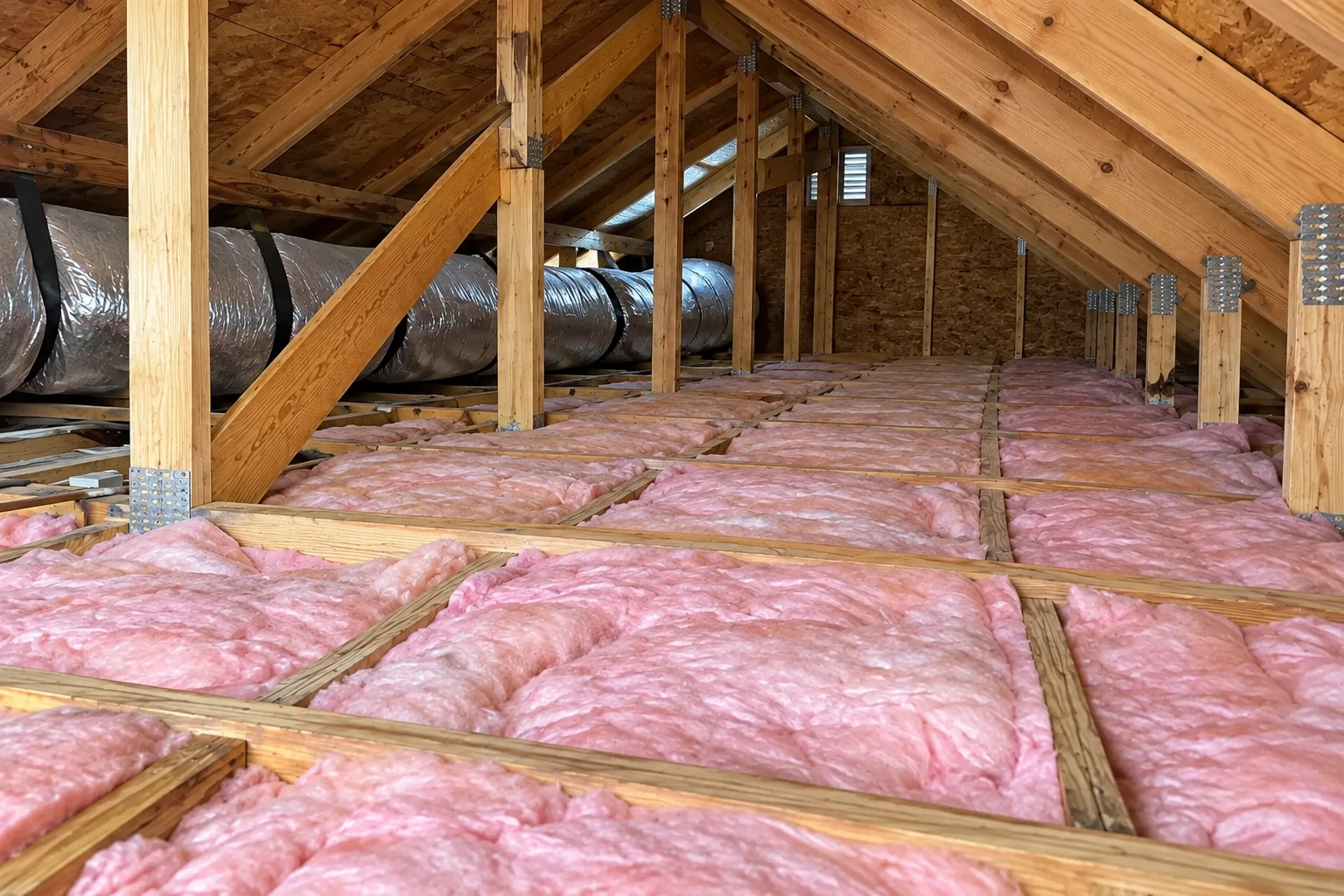
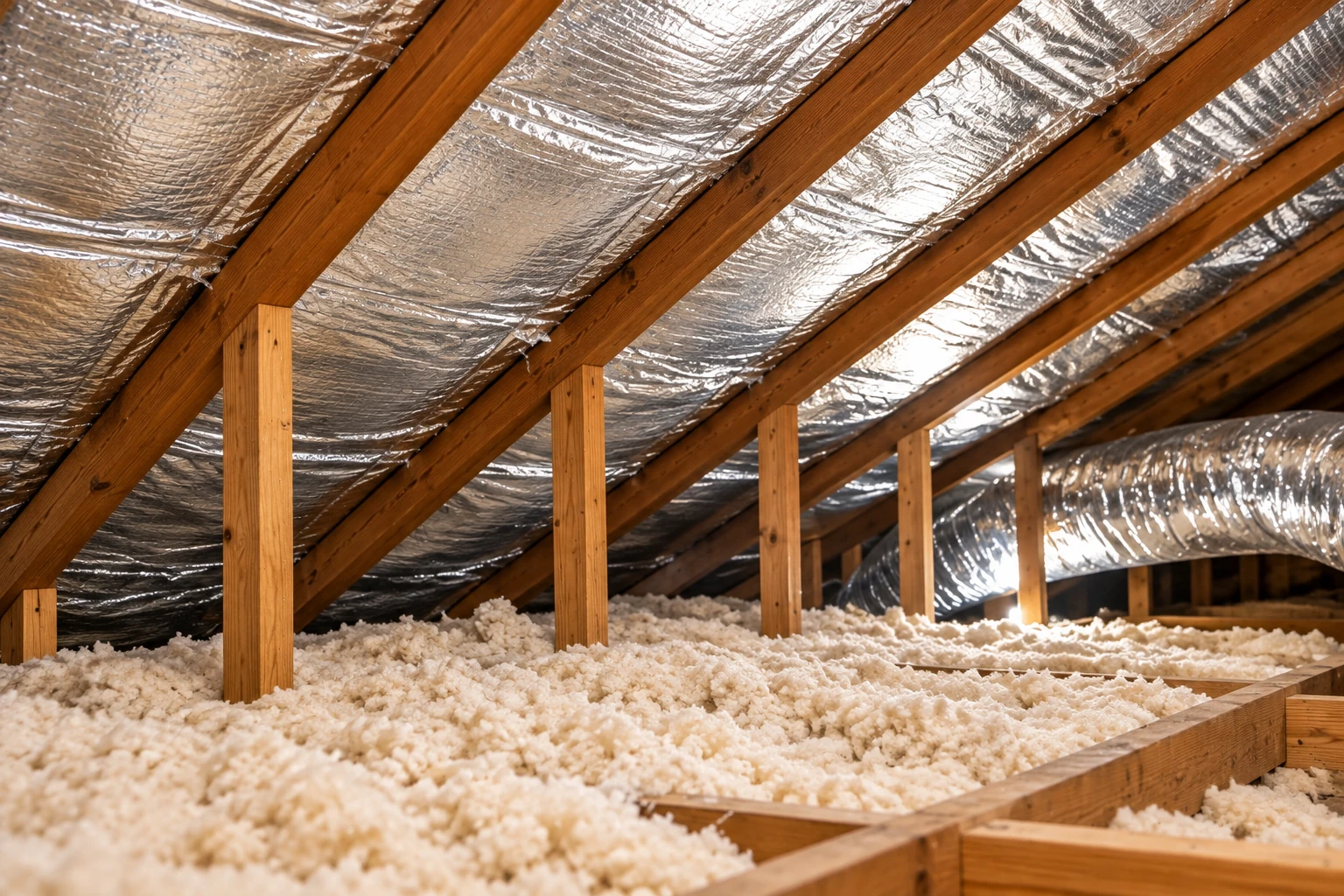
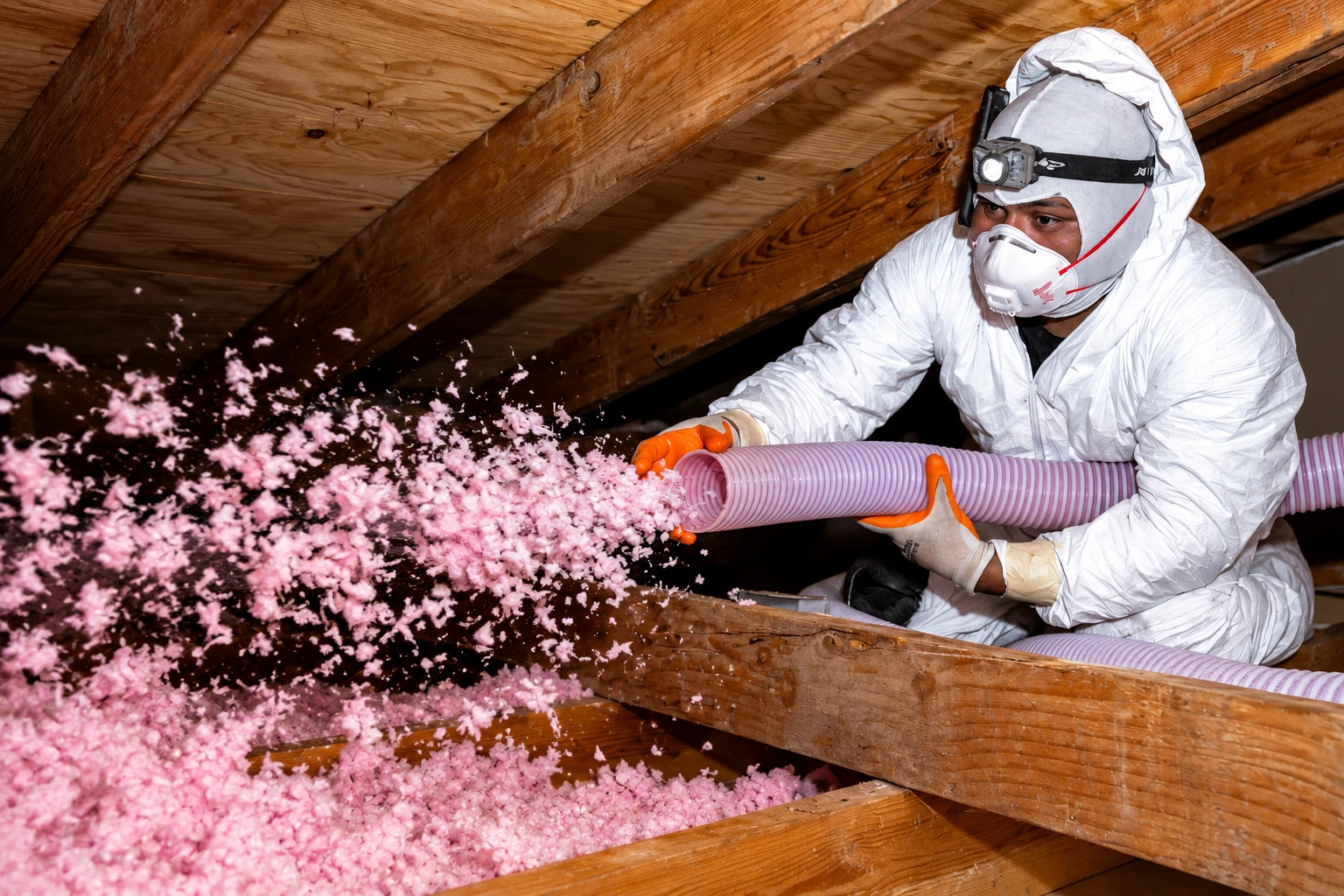
A new cover in a vented crawl space
This suits most houses with vents along the foundation and a bare or patchy dirt floor. The vents stay as they are, and the cover keeps ground moisture down while the space still gets outside air.
Musty smell, damp dirt or puddles under the floor? We fix the water first, then lay a cover that keeps ground moisture down.
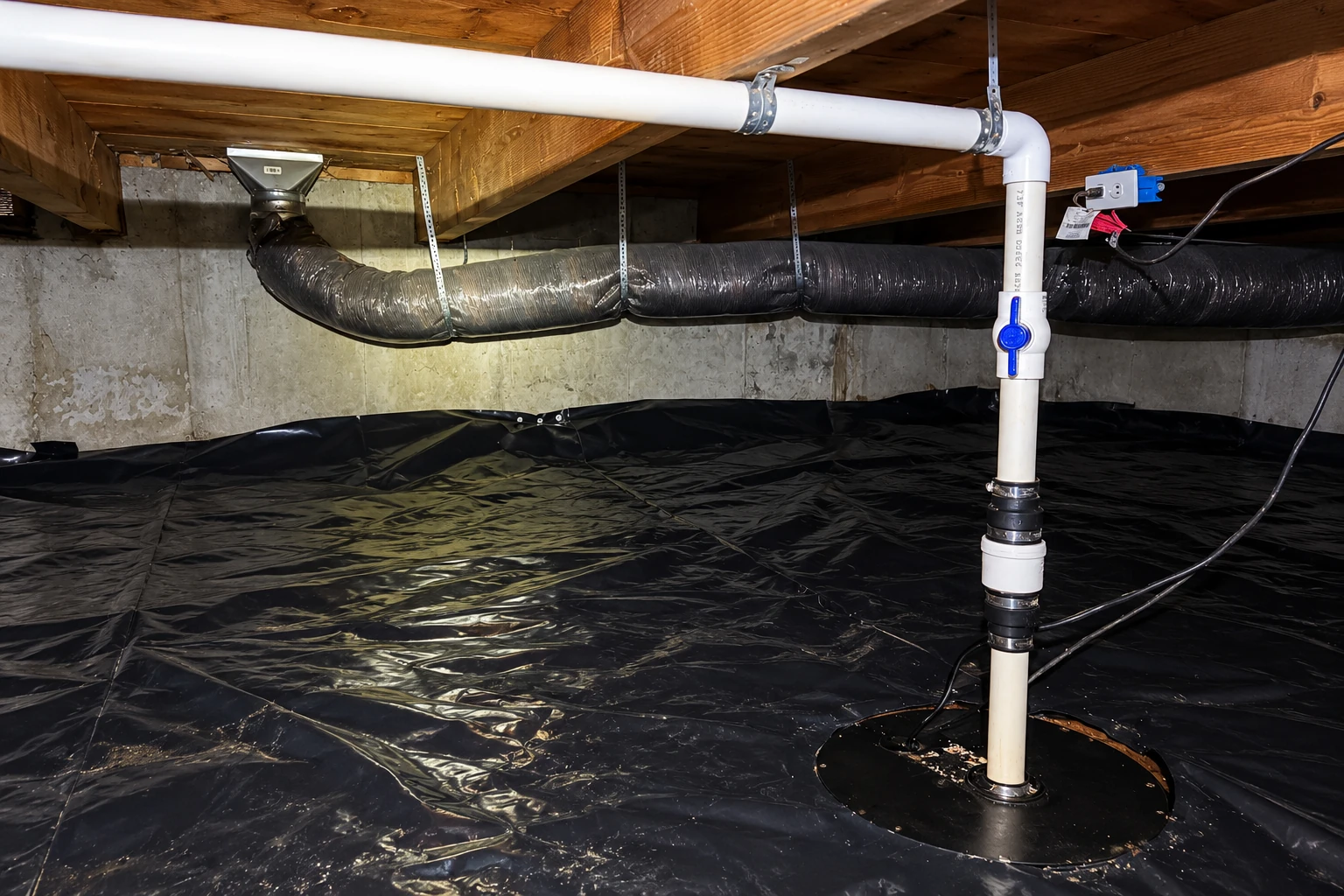
Vapor barrier installation in East Los Angeles means laying a heavy plastic cover over the dirt floor of your crawl space, so the moisture and soil gases coming up from the ground stay under it instead of rising into the space below your floors.
Most calls start with a musty smell coming up through the floor, damp dirt a plumber noticed, or an old sheet of plastic that's torn and bunched up in the corners. The price mostly comes down to the size of the crawl space, how tight it is to move around in, whether old plastic or insulation has to come out, and how far up the walls and posts the cover runs. The schedule turns on what has to happen first, because a leak or standing water gets fixed before any cover goes down, and your estimate writes that order out so you know what comes when.
I look under the house with you, point out where water is getting in and what's already down there, and write down what the job needs and what has to come first. If your crawl space is dry and the cover you have is fine, I'll tell you that.
Before this, I spent years clearing out garages and attics around East Los Angeles and kept finding material that was soaked, flattened or full of droppings. That's why we fix the cause before anything new goes in, and why the order of the job matters to us.
We're licensed and insured. A lead installer runs the crew on the job, and when the cover's down I look it over with you so you see what we did. Backed by our satisfaction guarantee. Call (213) 329-0372 or use the form to set up your estimate.
Tell us whether your crawl space has vents, any standing water or leaks, and a water heater or furnace down there. We reply within one business day to set a time, then we look under the house with you and write down what the job needs and what has to come first. The on-site estimate is free and there's no obligation to book.
In East Los Angeles, building permits come from LA County Public Works, which covers the county's unincorporated areas, and its permit list names new building, alterations, repairs and system upgrades without mentioning vapor barriers. That leaves the question open for this job, and the county asks owners to reach the East Los Angeles Building and Safety Office by the phone or email on its listing to ask what a project needs. Before anything else, we check which office covers your address, since cities around here run their own building departments, and when a job calls for a permit we take care of that with them before work starts.
Southern California is fairly dry most of the year, but crawl spaces here still run into trouble from coastal moisture, aging foundations, termites and the occasional heavy storm. Under the older raised-floor houses we see around here, a big storm or a tired foundation is usually when water reaches the dirt, so we look at the yard and the foundation as well as under the house. We're based in East Los Angeles and do the same crawl space work across the cities around it, including Montebello and Pico Rivera.
Yes, a ground cover belongs in vented and unvented crawl spaces alike, and it also helps keep soil gases from coming up into the house. In a vented crawl space most of the moisture comes from water outside, like poor grading, missing drainage around the house or heavy watering near the foundation. The cover works best when those get put right too, so we'll point out what we see in the yard at the estimate.
It's usually a leaking pipe above the crawl space or groundwater seeping in, and yes, the water has to come out and the source has to be repaired before a cover goes down. Otherwise the moisture just builds up again under the new plastic. When we find it, we write that repair into the plan ahead of the cover.
The price comes down to the size of your crawl space, how easy it is to move around in, and what has to happen before the cover goes down. Pulling out old plastic or insulation, fixing a leak and running the sheet up the walls and posts all add to it, while an open floor with nothing to remove costs less. Guidance for this work has the cover reaching the whole floor or as close as reasonably possible and running up the walls and columns, so when you compare quotes, check whether each one covers that or just the floor.
You can, but if an older natural-draft water heater or furnace, the kind that sends exhaust up a flue on its own draft, sits in the crawl space, the government's checklist for sealing vents calls for a combustion safety test afterward. That test checks that exhaust isn't spilling or drafting back into the house. Research behind ENERGY STAR guidance found that properly closed crawl spaces can control moisture better than vented ones, but that finding is about humid regions, so we talk it through with you before recommending it here.
Take a look under the house now and then to make sure the cover is still doing its job and has no tears, which is what upkeep guidance for these covers suggests. Rips usually come from boxes dragged across it or from plumbing and pest work under the house. If you find a tear or water sitting on top, call us at (213) 329-0372.