C&L East Los Angeles InsulationC&L East Los Angeles InsulationRequest an estimate(213) 329-0372

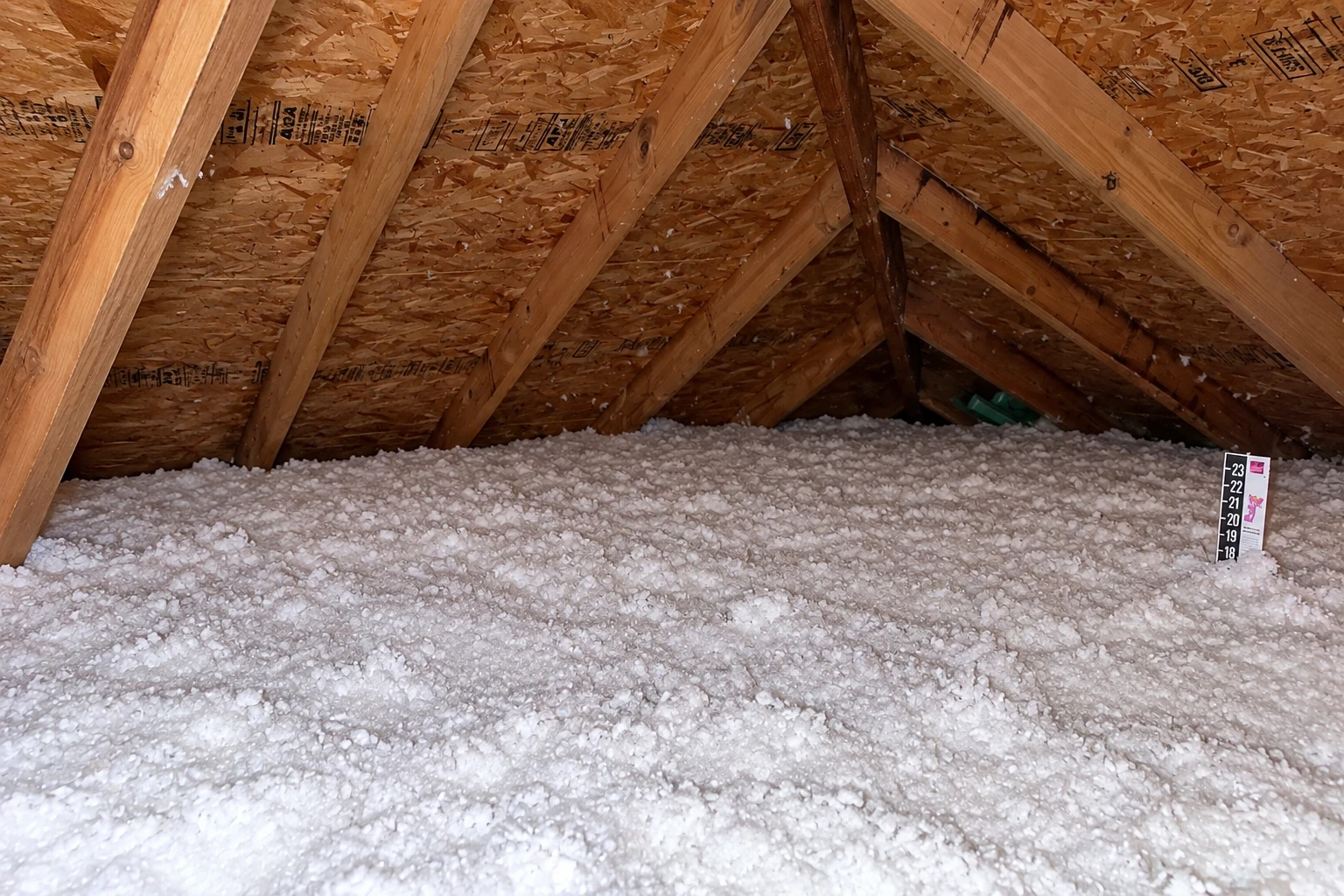
Blown-in insulation in East Los Angeles CA - an attic covered evenly to the walls

Hot upstairs rooms and a power bill that climbs all summer? We seal the gaps, then blow in an even layer that helps your ceiling hold back heat.

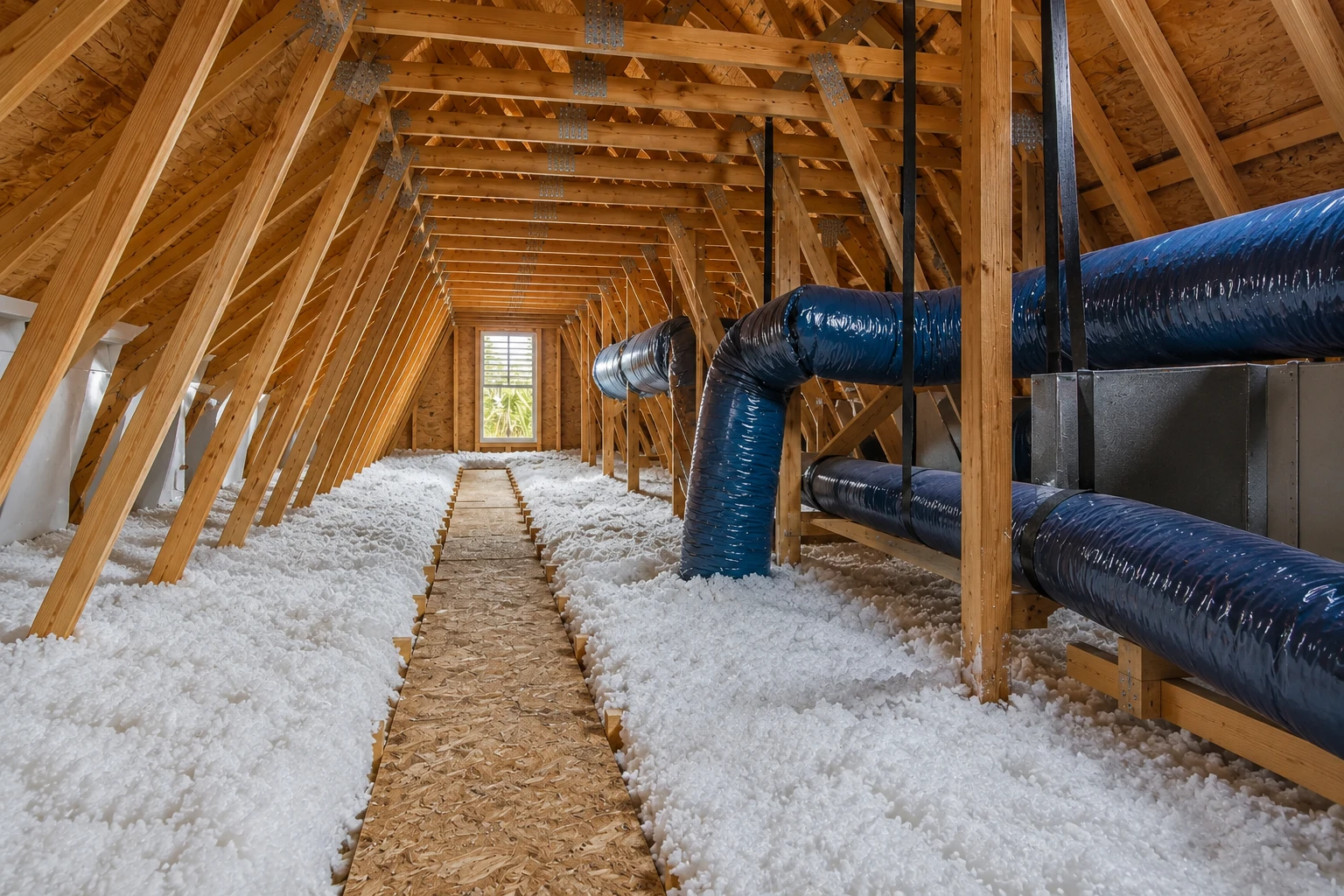
Attic with loose white blown-in insulation covering the floor around a narrow walkway and large blue ducts.

Is blown-in insulation right for my East Los Angeles attic?

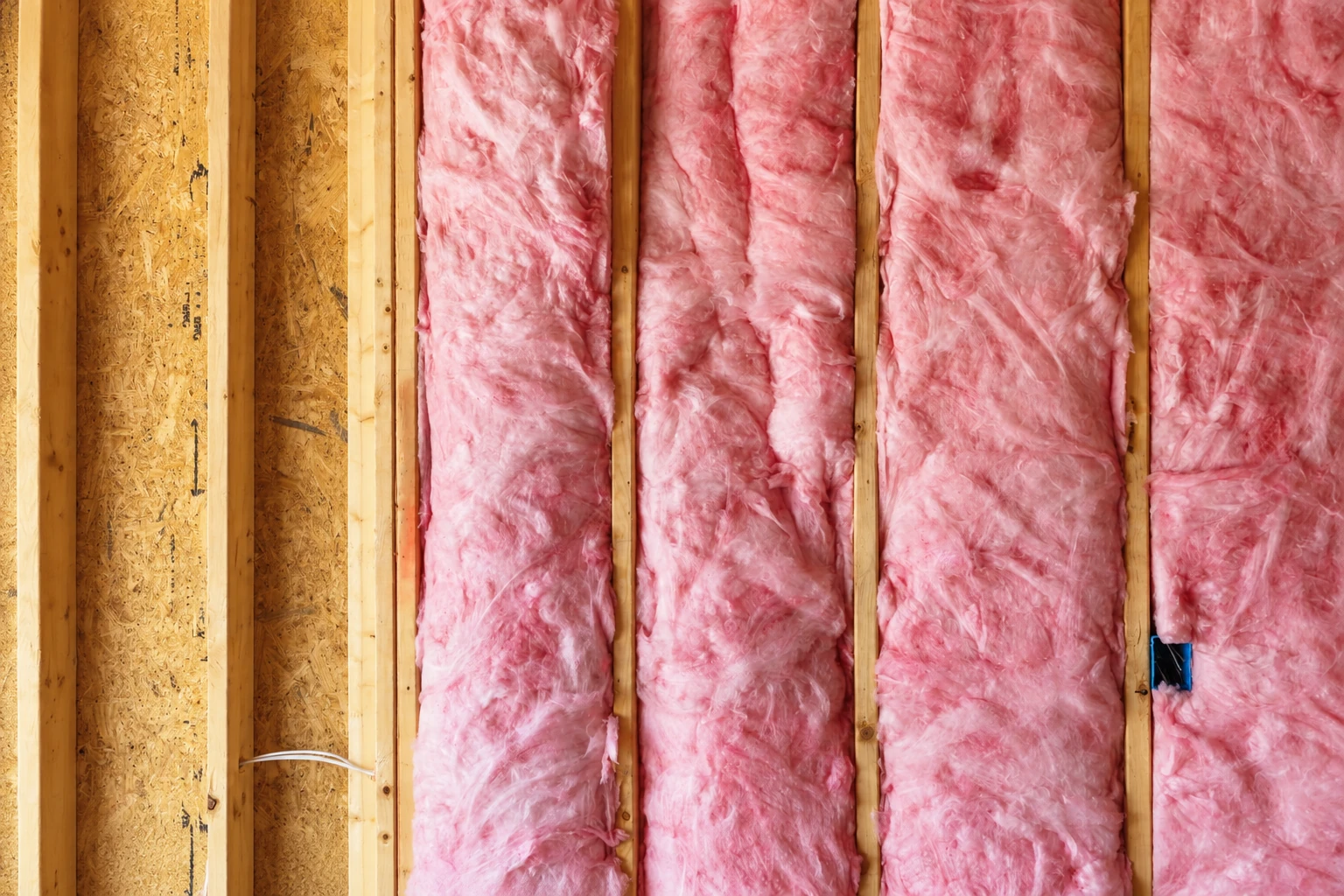
Blown-in insulation is loose fiberglass, rock wool or cellulose blown through a hose over your existing attic floor. For most East Los Angeles homes, it's the simplest way to bring a thin or flattened attic back up so the ceiling holds back heat.

Most people call us because the upstairs is hot, the room over the garage never cools down or the power bill keeps climbing. When I look in the attic, the insulation is usually thin, flattened or pushed into piles, and sometimes it's soaked or full of droppings. The price moves with the size of the attic, how many inches are already up there, how many gaps need sealing and whether the old layer has to come out first. The schedule depends on that same order of work and on whether your address needs a permit. If drafts are the bigger problem, attic air sealing may be the job you need, and if your attic is fine as it is, I'll tell you. I look at it with you and write down what it needs and what has to come first.

How we do blown-in insulation, step by step

First we check what's already up there, because new material over a wet or dirty layer only hides the problem. Next we seal the gaps around wiring, pipes, fixtures and the hatch so the new layer isn't fighting a draft. Anything that gets hot, like flues or light fixtures that can't be covered, gets blocked off before we start blowing, and we keep the eave vents clear so the attic can still breathe. Then we spread the insulation to an even depth across the whole attic floor, out to the walls, so no corner is left thin. The crew cleans up as they finish, and I look over the attic with you at the end.

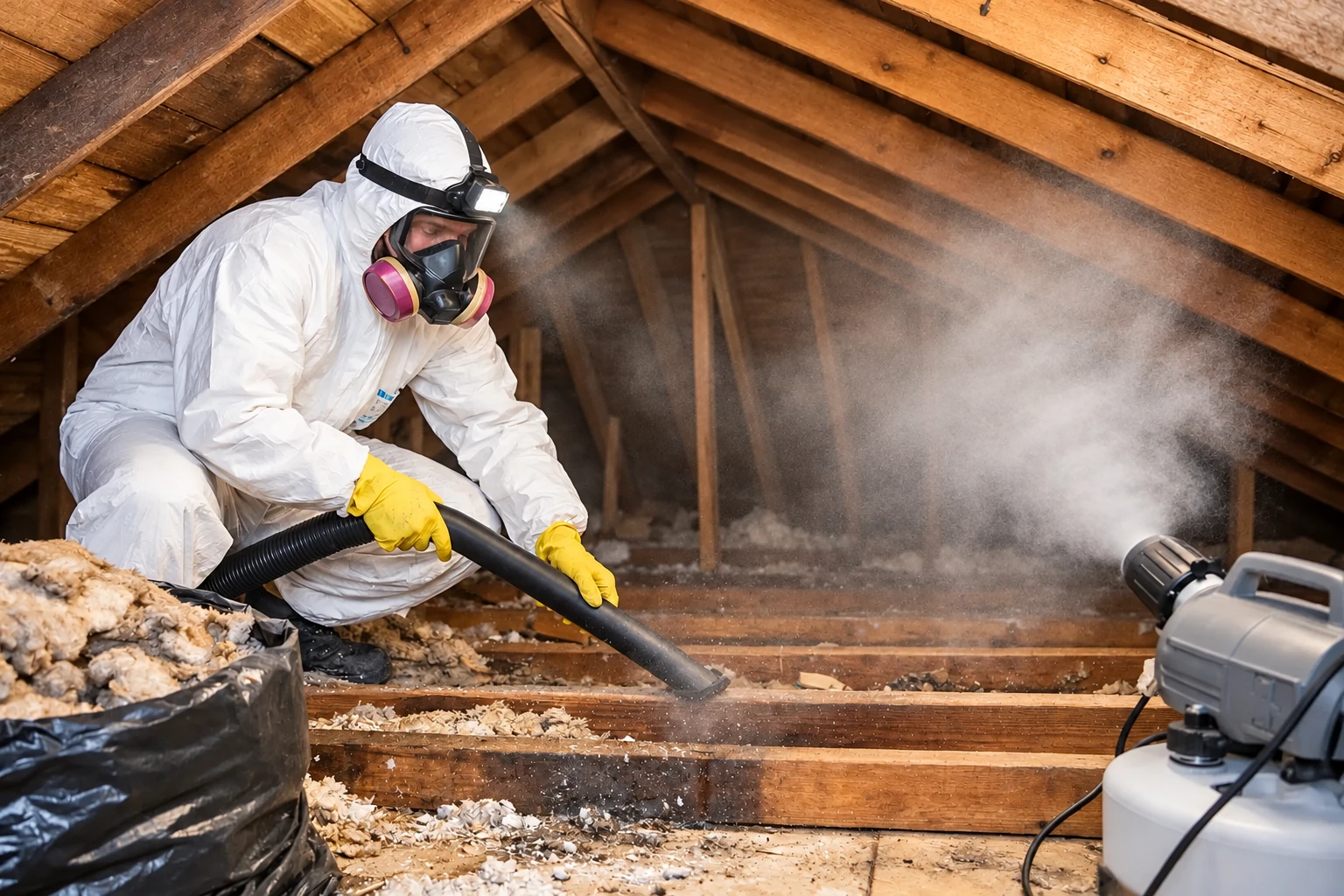
Some attics need more than a top-up. When the old insulation is soaked, chewed up or full of droppings, insulation removal comes first, so nothing bad ends up buried under the new layer. If the drafts and cold floors also come from the walls or the crawl space, our home insulation work looks at the whole house instead of just the attic.

Topping up an attic that's just thin

This suits an attic where the old insulation is dry and clean but flattened or uneven after years up there. We seal the gaps and blow fresh material right over it, which is usually the simplest way to bring the ceiling back up.

Starting fresh after the old layer comes out

This is for attics where what's there is soaked, torn up by pests or full of droppings. We clear it out first, then seal and blow in a new, even layer over a clean floor.

Spray foam when the ducts live up there

Spray foam costs more, but it seals air while it insulates, and that matters when your heating and cooling ducts run through the attic. When they don't, sealing the gaps and topping up with loose fill usually wins, and I'll tell you which one fits your attic.

Why East Los Angeles homeowners call C&L East Los Angeles Insulation for blown-in work

I come out for every estimate

I'm the one who climbs into your attic at the estimate, and I'd rather tell you it's fine than sell you a job you don't need. On the day of the job, a lead installer runs the crew, and at the end I go over the work with you.

Doing attics in the right order since 2017

Before this trade, I spent years hauling junk out of garages and attics around East Los Angeles, and I kept finding insulation that was flattened, soaked or full of droppings. I opened this business in 2017 so the problems get fixed before new insulation goes in.

Licensed and insured, with a satisfaction guarantee

The state licensing board has its own class for contractors who install insulation, so it's fair to ask anyone working in your attic about their license. We're licensed and insured, and our work is backed by our satisfaction guarantee. Call (213) 329-0372 or use the form below.

Get a written plan for blown-in insulation in your attic

Call (213) 329-0372 or send the form, and we'll reply within one business day to set a time. The estimate is free, done on site and comes with no obligation, and I'll look at the attic with you and write down what the job needs and what has to come first. It helps to know roughly how big your attic is and what kind of recessed lights you have.

Location
East Los Angeles, CA 90022
Hours
Mon–Fri: 6 AM–10 PM, Sat–Sun: 7 AM–11 PM

Blown-in insulation permits and attics in East Los Angeles

East Los Angeles isn't part of any city, so homes here are covered by the county's permit office, LA County Public Works, rather than a city building department. The county's permit list names additions, alterations, repairs and replacements but doesn't mention insulation, so that list alone doesn't settle whether your attic job needs a permit. The county asks owners to contact their local office through its Service Locator to find out what a project requires. We check which office covers your address before anything else, and if your job needs a permit, we take care of it with them before work starts.

Many of the houses we work on here are older, with a small hatch, a low attic and insulation that's been flattened, pushed around or torn up by pests over the years. The edges near the eaves are often the thinnest part, which is backward, so that's where we pay close attention. We do the same work in Montebello, Monterey Park and other nearby cities, where the permit office can be different, so we check each address.

Questions about blown-in attic insulation

How much does blown-in insulation cost in East Los Angeles?

Angi puts the typical cost of a blown-in insulation project in Los Angeles at about $1,600 to $3,600. Where your attic falls depends on its size, how many inches are already up there, how many gaps need sealing and whether old insulation has to come out first. I'll give you your own figure after I've seen your attic.

What is the best way to insulate an attic, blown-in or batts?

For most attics, blown-in loose fill is the better choice because it usually costs less than batts and covers the attic more fully, though installation costs vary. Loose fill settles in around joists, wiring and odd corners where batts tend to leave gaps.

How do I know if my attic needs more insulation?

Check how many inches are up there, whether the layer is even, dry and clean, and how old the house is, since older homes often have a thin or flattened layer. The usual guidance is to add insulation over the attic floor until it meets or exceeds current building and energy codes, with the depth as even as possible. If what you have is already in good shape, I'll tell you so.

Why do air leaks need to be sealed before blowing in insulation?

Most insulation doesn't stop air from moving, so warm or cool air keeps slipping through any gaps underneath it. The usual guidance is to seal the leaks between the attic and the house first, especially around dropped ceilings, wiring and plumbing holes, light fixtures and bathroom fans.

Can blown-in insulation go over recessed lights?

Only if they're IC-rated lights, which are built airtight and made to be covered with insulation. Other recessed lights, along with flues, chimneys and exhaust fans, need metal flashing that keeps the insulation clear of them. The kind of recessed lights in your ceiling shapes the plan, so we check them first.

Call (213) 329-0372