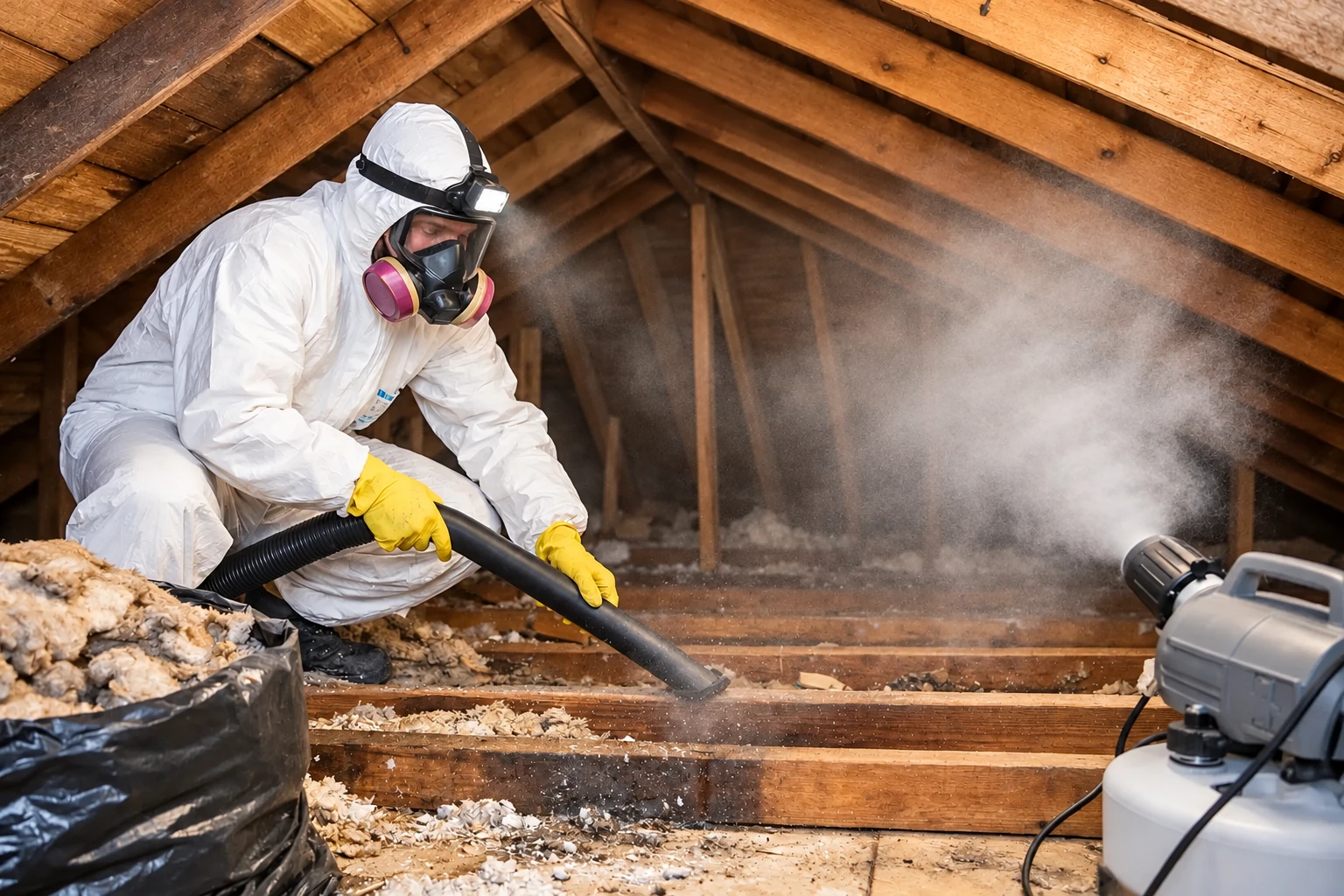
First I check what's actually up there, because if it looks like vermiculite, we leave it alone and point you to a separate asbestos specialist. For everything else, we cover the floors from the door to the attic hatch and hang plastic sheeting around the opening so the dust stays in the attic, and the crew suits up in protective gear before anyone climbs in. We pull out the insulation that water, mold, fire or rodents have ruined, bag it and carry it out, working down to the bare attic floor. With it gone we can see the old roof leak, the spot where the rats got in, and the gaps around can lights, pipes and the hatch, and those get dealt with and sealed before any new insulation goes in. Then we clean up so your house is left clean.
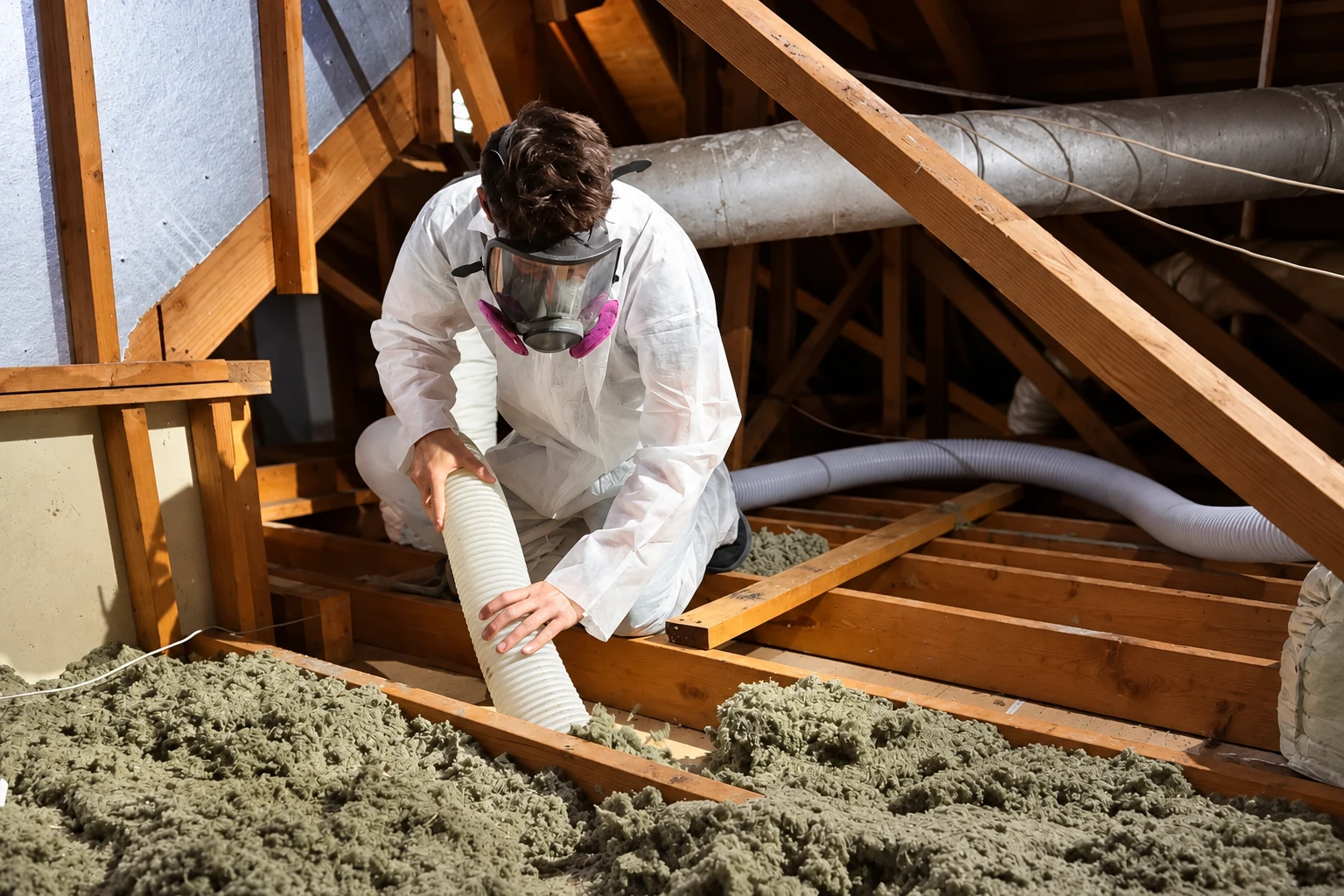
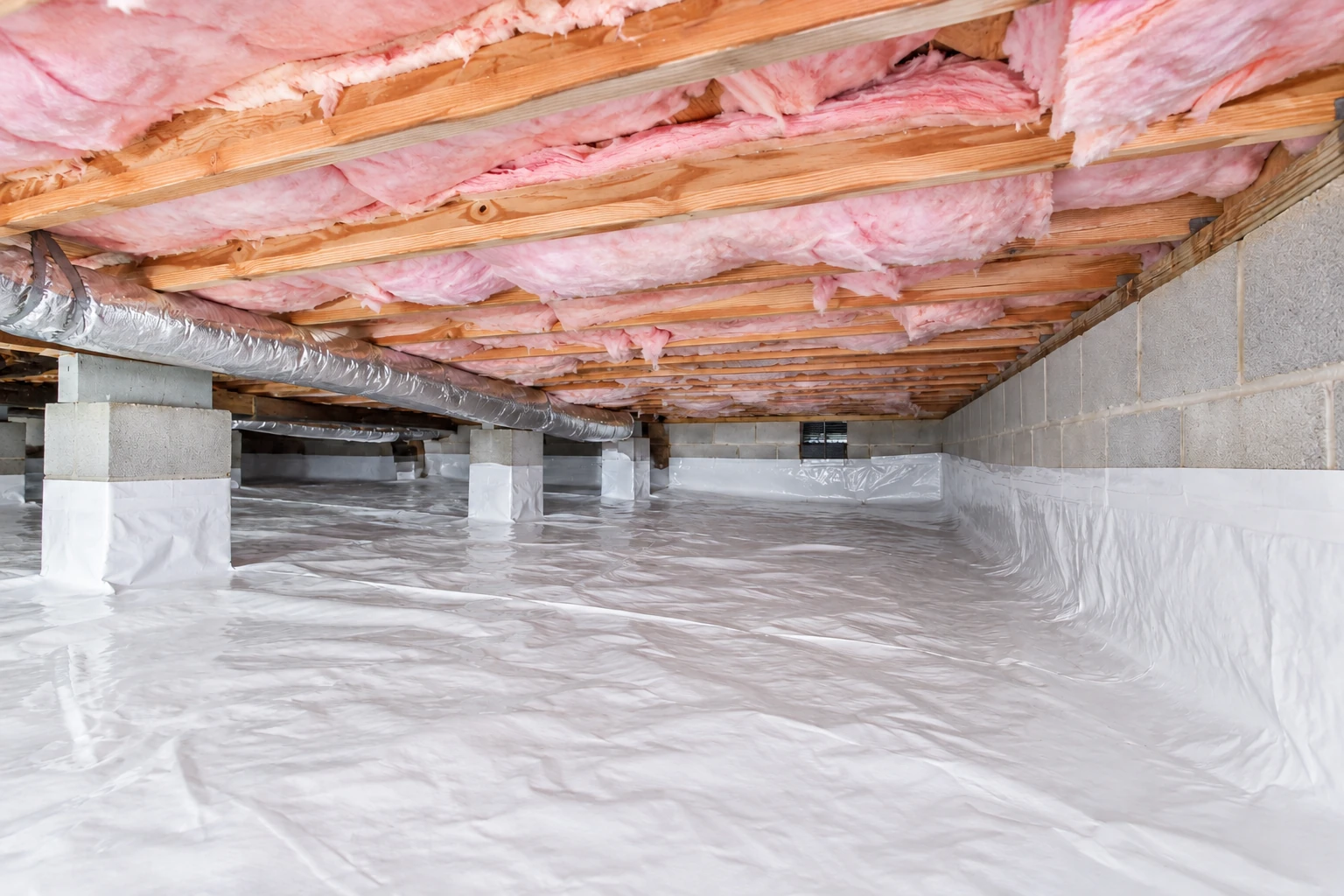
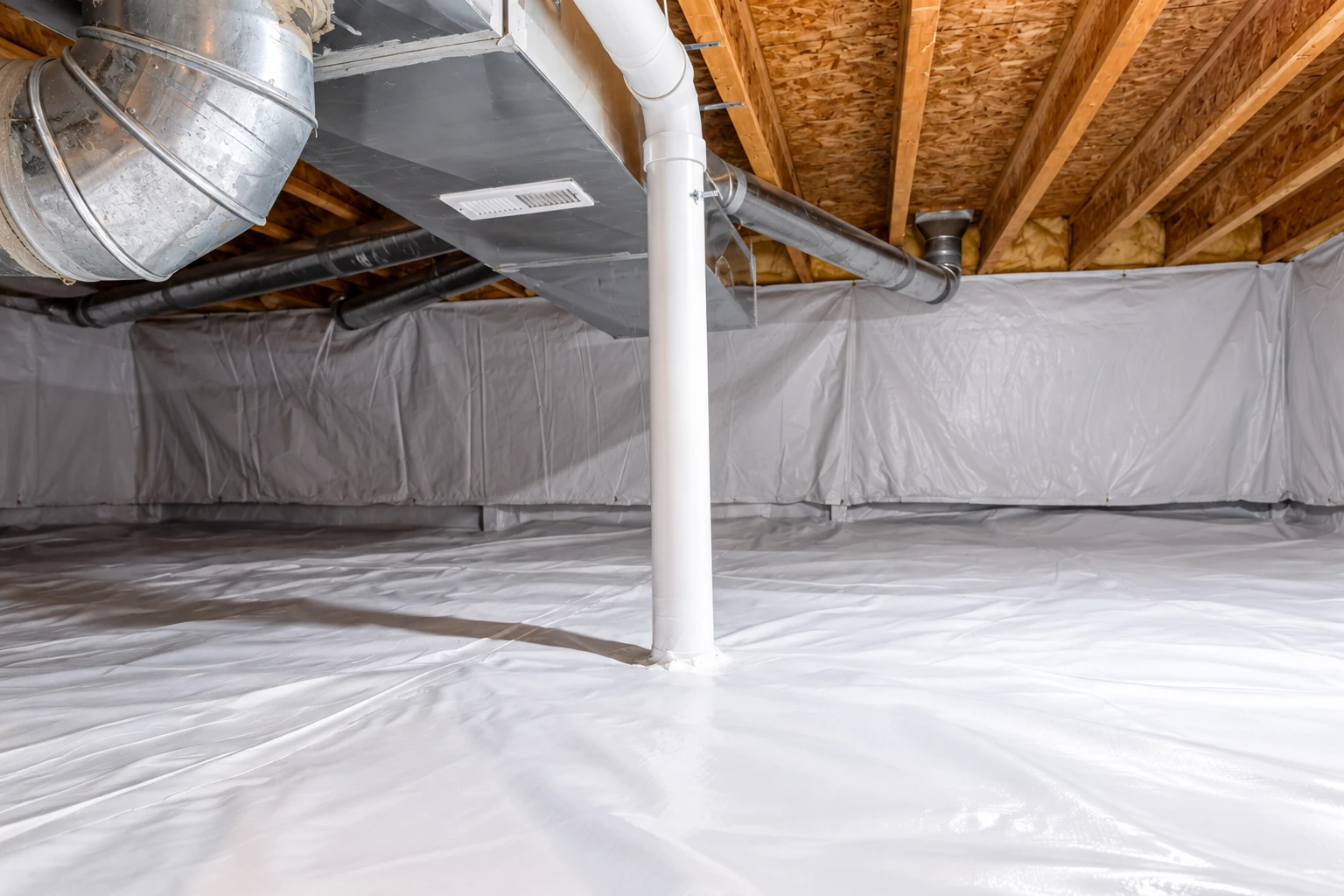
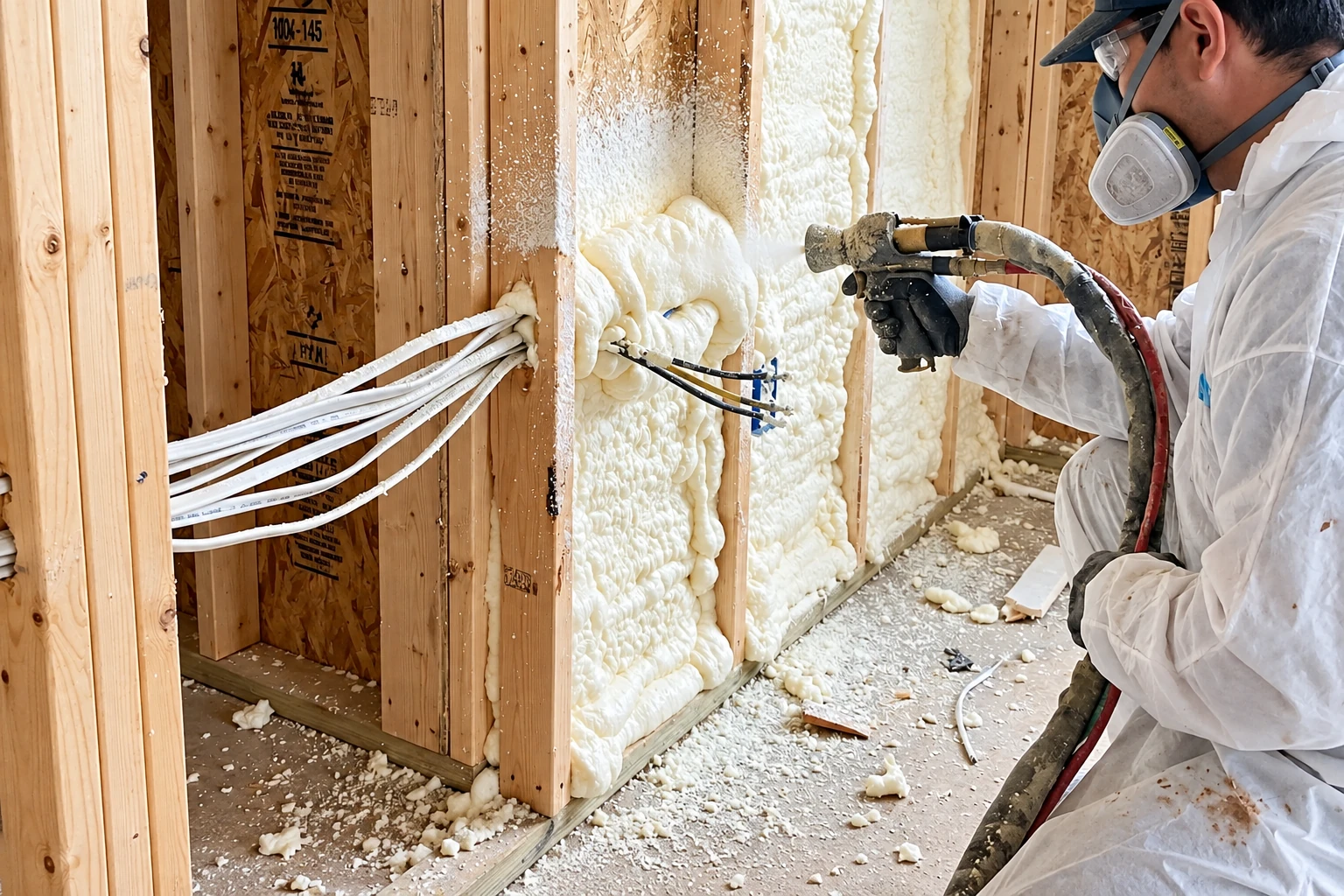
Removal is usually the first step, not the whole job. Once the attic is clear and sealed, new insulation goes back in, laid deep all the way out to the edges without burying the eave vents that let the attic breathe. If your floors are cold, the problem may be under the house, where crawl space insulation has often sagged or been pulled down by animals, and if a room still feels hot or drafty after the attic is done, wall insulation is the next place to look.
Removing one damaged section
This suits a single roof leak or one nest where the rest of the attic is dry and in decent shape. We take out the ruined patch and leave the good insulation in place, because pulling material that's still doing its job only adds to your bill.
Clearing the whole attic
This suits droppings spread across the attic, smoke from a fire, or mold in more than one spot, since patching around that leaves the problem behind. Afterward, sealing the gaps and topping up with blown-in fill, loose insulation blown through a hose, usually beats spray foam, which costs more but seals air as it insulates, unless your ductwork runs up there.